Rage Machine

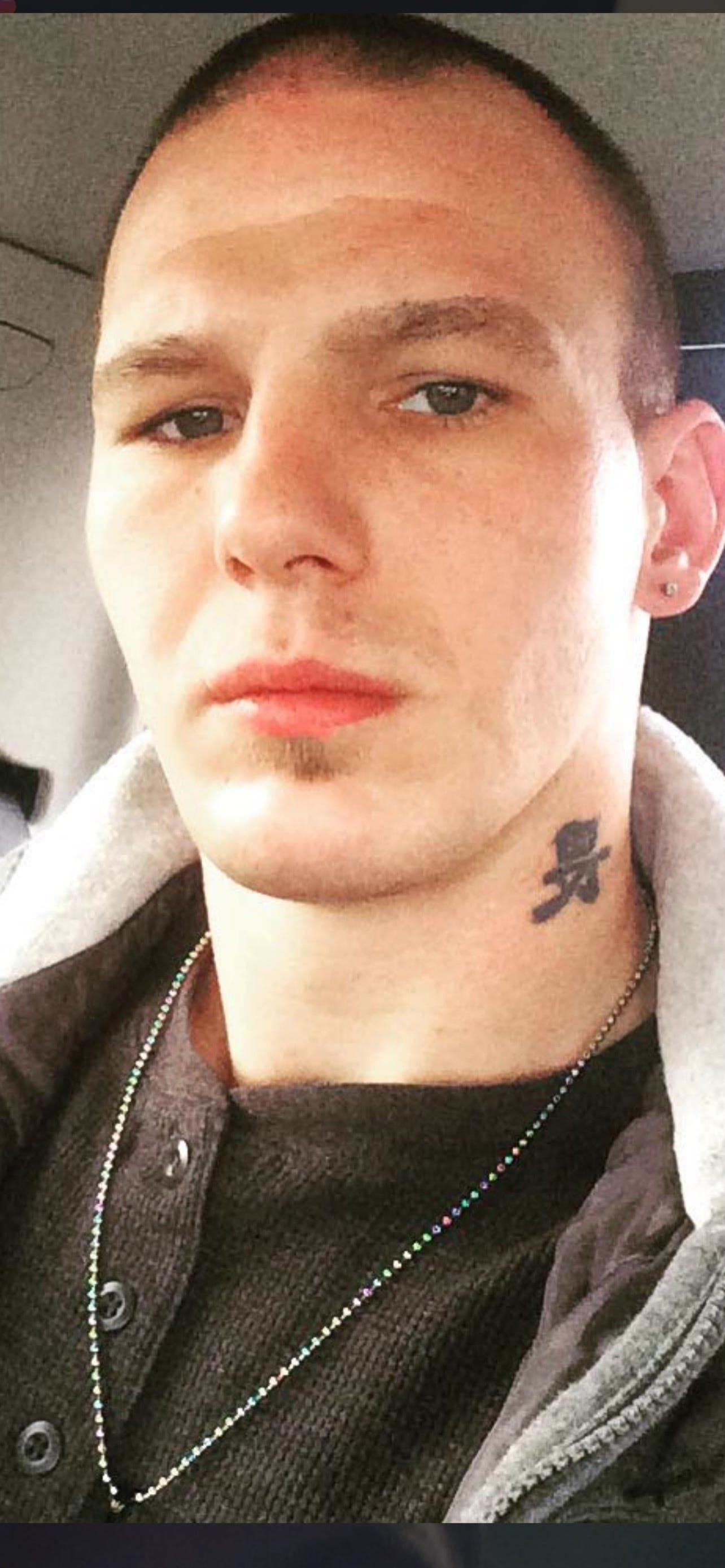
Steve Vanwhy, 2016 (Rage Machine) pictured above
Rage Machine
—
In The Shawshank Redemption, there’s a scene I love where Andy Dufresne—the wrongly convicted wife-killing banker—is talking to his friend and fellow prisoner, Brooks Hatlen. Andy wants to build a better library for the inmates at Shawshank, but money is an obstacle. He tells Brooks he’s going to ask the warden for funds.
Brooks laughs. He laughs because he sees Andy is almost childishly naive when it comes to prison, and Brooks knows better. He politely explains: “Son, I’ve had six wardens through here during my tenure, and I have learned one great immutable truth of the universe: ain’t one of ‘em been born who’s asshole don’t pucker up tight as a snare drum when you ask for funds.”
Brooks and Andy are prison friends, polar opposites in this story. Andy is innocent; he will later engineer a daring escape alone and leave a trail for another friend, Red, to follow. Andy embodies the “redemption” in The Shawshank Redemption. And Brooks is what happens to the friend who is not as lucky as Red.
Brooks is paroled before Andy. He is free, but still imprisoned by his circumstances. Not long after release, hopelessness overtakes him. He decides he’s done playing the “Society’s Game”—no more asking “the Man” for permission to take a piss only to be told to get back to work. He pens a letter to his friends, saying a few things like this: “Dear Fellas. I can’t believe how fast things move on the outside… I have trouble sleeping at night. I have bad dreams, like I’m falling. I wake up scared. Sometimes it takes me a while to remember where I am… I don’t like it here. I’m tired of being afraid all the time. I’ve decided not to stay.”
Alone in the world, Brooks decides the only way to unlearn a lifetime of institutionalization is to hang himself. “I doubt they’ll kick up a fuss. Not for an old crook like me.” He carves “Brooks was here” into the wooden beam, smiling with a sort of inner peace before stepping off the chair—his final words to the world. His final act.
These two fictional outlaws are unforgettable: two humans being human, perpetually trying to overcome the “something” in their way, with two outcomes that couldn’t be more different.
Had Brooks been released after Andy and Red, with friends waiting for him in the world on some beach somewhere, there might have been a happy ending for him too. But that wasn’t his luck. Call it fate, or blame the writer, because Brooks wasn’t a main character in Andy’s story.
In the end, though, they all escape. No more being treated like dogs, counted five times a day like diamonds. They all get away from the “something” in their way. That’s what matters.
Let me tell you something about myself. I’ve spent most of my life collecting outlaw friends. The special ones, because I admire their spirit, their willfulness, their uniqueness. I’ve always been drawn to the flawed humanity in the good bad guys of movies: the defiance of Riddick’s Furian race, who’d rather fight to the death than be conquered. People who fiercely resist control are rare. Whenever I spot one, I get a rush from recognizing it. And if I can help them, play some small role in their anti-hero’s journey, I do.
Now let me tell you a short story about finding one of these caged spirits, how we became friends, and what I learned from him.
Meet Rage Machine. He is a stocky, 175-pound genetic freak—a powerhouse kid who probably leaves testosterone residue in his fingerprints. Rage comes from Coaldale, an old coal-mining town near the armpit of Pennsylvania, long forgotten and deep in decline.
Rage and I meet in prison. One of those low-budget, locked-down, no-movement, stir-crazy holes that shouldn’t exist. He can’t be older than twenty-one. I have a few years on him but am still in my twenties. We gravitate toward each other by default; the demographics are limited.
We become workout partners. In our off time, Rage isn’t much for talking, though he’ll try. He sits across from me in the dayroom with a reluctant look until he gets going, then tells me stories: fights he’s had, the incident with his drunk uncle where they blew up someone else’s cow (that’s what lands him here). He describes a foot chase—running from police, evading them until he hits the river.
“I knew they wouldn’t follow me into the water,” he says. “And the cops knew it too, so they tased my ass. I felt the prongs stick in my back. Zap. I’m leg-deep in the river. I think I’m fucked and gonna go down right there and drown.”
But that’s not what happens. The taser only makes him run faster. His legs keep doing what they were already doing when he got electrocuted. He gets away.
As weeks pass, I watch Rage slowly come out of his shell. We improvise workouts. We do biceps curls with a mop stick and bags of books hanging off the ends. Once we try boxing drills—I hold mitts barehanded while calling out punch combinations. Rage doesn’t know how to pull punches; he bursts blood vessels in my hands, so we move on to other things.
Rage does abnormal shit almost daily: climbing from bottom tier to top like Spider-Man using only a steel support beam, making it look easy; push-kicking his cell door open, somersaulting into the dayroom, pretending to mow down a table of card playing homies in a Call of Duty-style ambush. Ballsy and hilarious.
The ballsiest might be the racist songs he belts out to the entire tier at night—lying on the concrete, singing in a fake country twang from under his door about us all being white on the bottoms of our feet. Everybody—Black, white, Latino—cracks up. They all see what I see: a fearless kid, brazen and good-natured enough to be himself, chips fall where they may. Everybody likes him.
It’s obvious Rage is crazy as hell. But he’s young, smart, with serious potential. He should have been an athlete, a fighter, a gladiator in another era. Instead, he’s in prison with me because he had nothing else to do but get drunk, fight, blow up cows, and run from the cops. He turned into a king-hell outlaw with unstoppable legs.
Long story short, I love people like Rage. I eat that rebellion shit up, and breathe it like fresh air in a sulfurous hell. Here is a kindred reprobate like myself.
We became friends and stayed in touch after I transferred.
In my absence, Rage works out, paces his cell, springs five feet from floor to top bunk landing in a squat, or stares at his reflection in the night-blackened window and punches himself in the face repeatedly—to thicken the bones in his face. Too much idol time, and too much deprivation turns him into a self loathing war machine.
He eventually catches a break and transfers to low-security dorms where there’s more freedom, then gets involved with idiots running bare-knuckle fights for commissary bets. He wins his fights but ends up in the hole.
One day I got a letter from him—forwarded verbally through my mother. He tells her about the fights, about being sent to the hole, then casually mentions kicking his segregation cell window repeatedly until it breaks. Not to escape—just to see if he could. The prison gives him a deadline to pay for it or face an escape-attempt charge.
He mentions the amount owed but never asks for help.
He doesn’t need to. I know how to be a friend. So does my mother. She sends the money right away.
Problem solved.
Fast-forward ten years.
I’m semi-free, building a life. My girlfriend is in the hospital giving birth to our second child—a boy.
The next day I’m running errands while she recovers. Rage calls while I’m heading back.
We talk on the phone. He sounds uncharacteristically somber.
“I fucked up,” he says. “I was out with Brit, got drunk, and knocked a guy out at the bar for disrespecting my lady.”
His newish girlfriend Brittany is pregnant too, but everything is falling apart. He’d been doing well—finally in a healthy relationship after years in a toxic one that was driving him insane.
I hear the change in his voice. He’s growing up. Regret, vulnerability—things I’ve never heard from him before.
“I feel like shit,” he says. “My arrest hit the local paper. Her landlord saw it, evicted her because he doesn’t want me around. Now she’s pregnant and homeless because of me. I tried talking to the guy, but he won’t listen. We’re working it out with our parents, putting money together for a new place.”
“How much more do you need?” I ask.
“Six hundred.”
“Then come get it. Meet me at the hospital. Visit, meet my son, meet my girl. Grab the money while you’re here.”
He accepts.
As the sun sets, I greet Rage and Brit in the hospital parking lot. They smile when they see me. Rage looks happy for a change. Maybe it’s love, maybe hope, maybe knowing people care enough to help him financially when his chips are down. Only he knows what he feels, but I recognize the look.
They come in with me to meet my newborn son, Chance, and his mother. Later I walk them out and see them off.
Mission accomplished.
Fast-forward another four years.
I’m back in prison, almost two years in. Rage has been busy with his life but notices I’m gone. He reaches out.
“I figured you were locked up again when you disappeared from social media,” he says, then fills me in. “Everything’s great now, bro. I got married. My wife goes to church. We have our own place, both working, making decent money. My daughter is four already. She’s amazing. You gotta meet her. We miss you, brother.”
When you’re locked up, words like that can cut deep: “We miss you, brother.” But not hearing them is worse.
My friend turned his life around while I’m hitting new lows. I realized Rage was teaching me something by example.
If there’s a parallel in all this, it’s this: Rage became the Andy. I’m turning into Brooks—the hopeless tragedy who can’t hack it outside, who can’t figure it out.
Self-objectivity is the hardest thing in the world. It’s a lifelong process; every inch gained vanishes the moment you relax.
It’s taken me a lifetime, but I’m starting to see why people change—and what makes the difference. A million variables separate one person from another, but the parallels matter.
I’d bet they have everything to do with friends, with the people we have around us.
Andy Dufresne had the machismo to out-bad the bad guys and pull out of his nosedive alone—but that was the movies. In the real world, that resolve plus that luck is rare. More common are the fates of Andy’s friends: Red starts anew only because a path is laid for him. Brooks can’t figure it out alone. Too old to restart, he chooses death.
Rage had good people around him. Fatherhood and his support network made the difference. Family and friends made him care about himself.
That’s the crux, the paradox: learning to care about yourself—whether it starts because you’re doing it for someone else or finally for yourself. Without it, there is no redemption. Someone has to do the rescuing, and the rescue has to start somewhere.
Caring about myself more is something I realized I needed to work on. Along with being a better man, a better friend, a better father.
If I want to escape the “something” forever in my way, I need to get out of my own way.
My redemption story arc depends on it.
None of these people or stories would be interesting if they’d followed the rules. That’s a given. But to what end? There has to be a way out.
Maybe writing will be mine.
All I know is I need to get the fuck out—one way or another. Because my friends and family are waiting for me out there, on a beach somewhere. A beach with a church on it.
—
Written by Tony Mammana, 11-14-2024
(This story is dedicated to my friend Steve Vanwhy (Rage Machine), and all the semi-peaceful, good-natured troublemakers out there. And to the mothers of androgenic greatness who let the boys be boys and love them for it.)
I’m so proud of you Tony and so is Steven.. you both have come so far from those days and have grown! Rage is definitely a great name to give him lol love reading these stories and seeing my husbands name is pretty awesome! Can’t wait to see your name on the best sellers list one day!!
Wow. That was a long time ago. I forgot all about that. I'm glad I was able to help him. U r not Brooks anymore. Brooks was old, tired n institutionalized. U r brilliant n ur family is on the beach waiting for ur arms to wrap around them. I promise. I ❤️ u.